

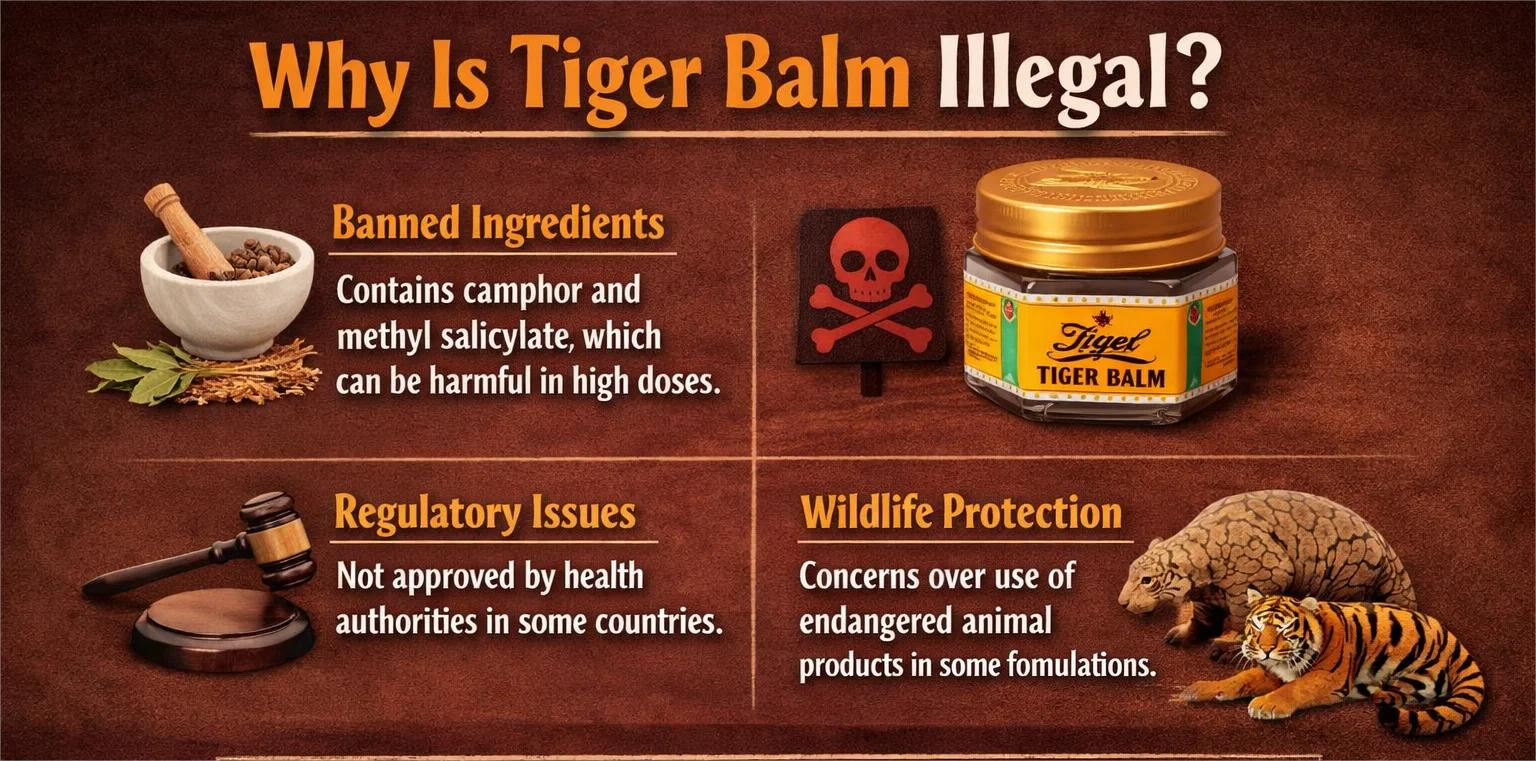
Tiger Balm is one of the most recognizable topical pain relief products in the world. Used for muscle pain, headaches, joint stiffness, insect bites, and even colds, it has been a household name for over a century. Despite its popularity and widespread use, many people are surprised to discover that Tiger Balm has faced restrictions or outright bans in certain countries and regions. This has led to a common and highly searched question: why is Tiger Balm illegal in some places?
What Is Tiger Balm and Why Is It So Popular?
Before understanding why is Tiger Balm illegal in certain regions, it is important to understand what Tiger Balm actually is and why millions of people trust it.
Tiger Balm is a topical analgesic ointment developed in the late 19th century by Aw Chu Kin, a Chinese herbalist. The product gained global recognition through his sons, who commercialized it across Asia, Europe, and later the United States. The balm is applied directly to the skin and works by creating a warming or cooling sensation that distracts from pain and improves blood circulation in the affected area.
The main active ingredients traditionally include camphor, menthol, cajuput oil, clove oil, and sometimes cassia oil. These ingredients are derived from plants and essential oils, which has helped market Tiger Balm as a natural or herbal remedy. However, “natural” does not always mean legally acceptable under modern pharmaceutical regulations.
Why Is Tiger Balm Illegal in Some Countries?
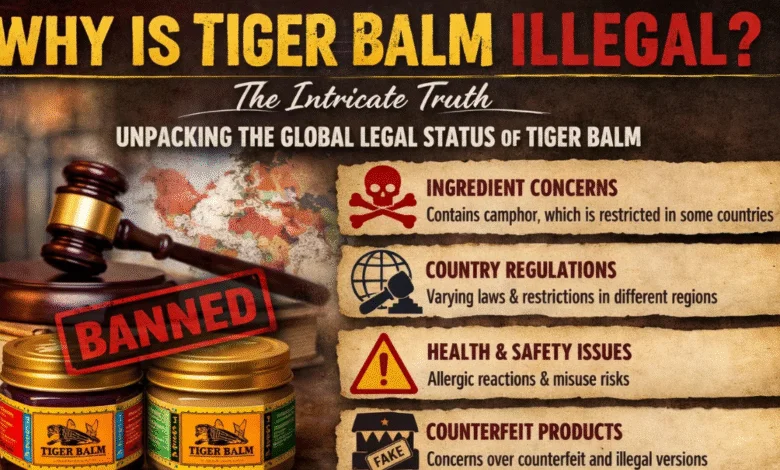
The question why is Tiger Balm illegal does not have a single global answer because laws differ from country to country. In most cases, Tiger Balm is not illegal due to criminal concerns but because it fails to meet specific health, safety, or labeling standards imposed by regulatory authorities.
In several regions, Tiger Balm has been restricted due to concerns over ingredient concentrations, especially camphor. Camphor is effective for pain relief, but it can be toxic if absorbed in large quantities or used improperly. Many countries have strict limits on how much camphor is allowed in over-the-counter products, and some versions of Tiger Balm exceeded these limits in the past.
Another major factor is that Tiger Balm has historically been marketed with broad medicinal claims. Modern drug laws require scientific evidence for any medical claims, and failure to comply can result in a product being restricted or temporarily banned.
Why Is Tiger Balm Illegal in the United States at Certain Times?
Many people specifically search why is Tiger Balm illegal in the US, largely because of confusion around FDA regulations.
Tiger Balm itself is not fully illegal in the United States. However, the U.S. Food and Drug Administration (FDA) regulates topical analgesics very strictly. The FDA sets maximum allowable limits for active ingredients like camphor and menthol. Some older formulations of Tiger Balm did not meet these standards, which led to import restrictions and reformulations.
In the past, certain Tiger Balm products were flagged for mislabeling or making unapproved medical claims. For example, suggesting that the balm could “cure” illnesses rather than simply relieve symptoms could violate FDA rules. These issues created the perception that Tiger Balm was banned, when in reality, only specific versions were restricted until they complied with regulations.
Today, FDA-approved versions of Tiger Balm are legally sold in the United States, but the formulation and labeling differ slightly from versions sold in Asia.
Why Is Tiger Balm Illegal in Europe?
When discussing why is Tiger Balm illegal, Europe presents another important case.
The European Union enforces very strict cosmetic and medicinal product regulations. Products are classified either as cosmetics or medicines, and the legal requirements for each category are very different. Tiger Balm falls into a gray area because it is applied externally but provides therapeutic effects.
In some European countries, Tiger Balm has been restricted because the concentration of camphor exceeded EU safety limits. The EU Scientific Committee on Consumer Safety has raised concerns about camphor exposure, especially in children and pregnant women. As a result, certain Tiger Balm products could not be sold unless reformulated.
Additionally, multilingual labeling requirements and safety warnings must be extremely precise in the EU. Failure to meet these standards has also contributed to restrictions, fueling the belief that Tiger Balm is illegal across Europe.
Why Is Tiger Balm Illegal in Some Asian Countries?
It may seem ironic, but even in parts of Asia, people ask why is Tiger Balm illegal or restricted.
In countries like India, Indonesia, and parts of the Middle East, herbal and medicinal products must be registered under national drug authorities. Some Tiger Balm imports failed to complete the necessary registration process or did not meet local safety documentation requirements. In such cases, authorities may ban or seize products, even if the same product is legal elsewhere.
Additionally, counterfeit Tiger Balm products are a major issue in Asia. Governments sometimes restrict imports to control the spread of fake or unsafe versions, which can lead to confusion among consumers about the legality of the authentic product.
The Role of Camphor in the Tiger Balm Controversy
One of the biggest reasons behind searches for why is Tiger Balm illegal is camphor.
Camphor is a powerful compound that creates a warming sensation and helps relieve pain. However, it can be dangerous if ingested or absorbed excessively through the skin. In children, camphor poisoning can cause nausea, vomiting, seizures, and in extreme cases, death.
Because of these risks, many countries regulate camphor very strictly. Some allow it only in low concentrations, while others ban it entirely in consumer products. Traditional Tiger Balm formulations often contained higher camphor levels than allowed under modern laws, leading to bans or forced reformulations.
Why Is Tiger Balm Illegal for Children and Pregnant Women?
Another reason people ask why is Tiger Balm illegal relates specifically to vulnerable groups.
Medical authorities in many countries advise against using Tiger Balm on children under a certain age or on pregnant women. This is due to the risk of skin absorption and potential toxicity of ingredients like camphor and menthol. While this does not make the product illegal for adults, it does impose warning label requirements.
If a product lacks proper warnings or instructions, regulators may classify it as unsafe, leading to temporary or permanent bans in certain markets.
Is Tiger Balm Actually Dangerous?
Despite the legal controversies, Tiger Balm is generally considered safe when used correctly. The question why is Tiger Balm illegal often creates unnecessary fear among consumers.
Millions of people worldwide use Tiger Balm daily without serious side effects. Problems usually arise from misuse, such as applying excessive amounts, using it on broken skin, or allowing children to ingest it accidentally. Regulatory bodies focus on worst-case scenarios, which explains why laws are often stricter than everyday experience suggests.
Why Is Tiger Balm Illegal While Similar Products Are Allowed?
A common point of confusion is why Tiger Balm faces restrictions while similar pain relief balms remain legal. This adds fuel to the question why is Tiger Balm illegal.
The answer lies in branding, formulation consistency, and international distribution. Local brands often tailor their formulations to meet national laws, while global brands like Tiger Balm must navigate dozens of regulatory systems. Any mismatch in compliance can lead to legal issues in specific countries, even if competing products are allowed.
Has Tiger Balm Been Reformulated to Meet Legal Standards?
Yes, and this is an important development in understanding why is Tiger Balm illegal.
To comply with modern regulations, Tiger Balm manufacturers have reformulated certain products by reducing camphor content, adjusting ingredient ratios, and improving labeling. These changes have allowed Tiger Balm to regain legal status in many regions where it was previously restricted.
However, older formulations may still circulate through unofficial channels, which can cause confusion and legal trouble for sellers and consumers alike.
Why Is Tiger Balm Illegal on Online Marketplaces?
Some people encounter issues when trying to buy Tiger Balm online and wonder why is Tiger Balm illegal on certain platforms.
Online marketplaces often enforce stricter policies than governments. If a product is flagged for containing regulated substances or making medical claims, platforms may ban its sale to avoid liability. This does not necessarily mean the product is illegal under national law, but it contributes to the perception of illegality.
Legal Status of Tiger Balm Around the World
Understanding why is Tiger Balm illegal requires recognizing that legality is not universal. In countries like Singapore, Thailand, China, and Malaysia, Tiger Balm is widely accepted and regulated as a traditional remedy. In the United States, Canada, the UK, and Australia, it is legal in approved formulations. In some EU and Middle Eastern countries, restrictions vary based on ingredient limits and registration status.
Conclusion
In conclusion, the question why is Tiger Balm illegal often arises from confusion rather than a clear global ban. Tiger Balm is not universally illegal; instead, its legal status depends on country-specific health regulations, ingredient limits, and labeling laws. The primary concerns behind restrictions are the presence of camphor and menthol in higher concentrations, potential risks for children and pregnant women, and strict rules around medical claims made by manufacturers. In some regions, older formulations or improperly labeled imports failed to meet modern regulatory standards, leading to temporary bans or sales limitations.
