

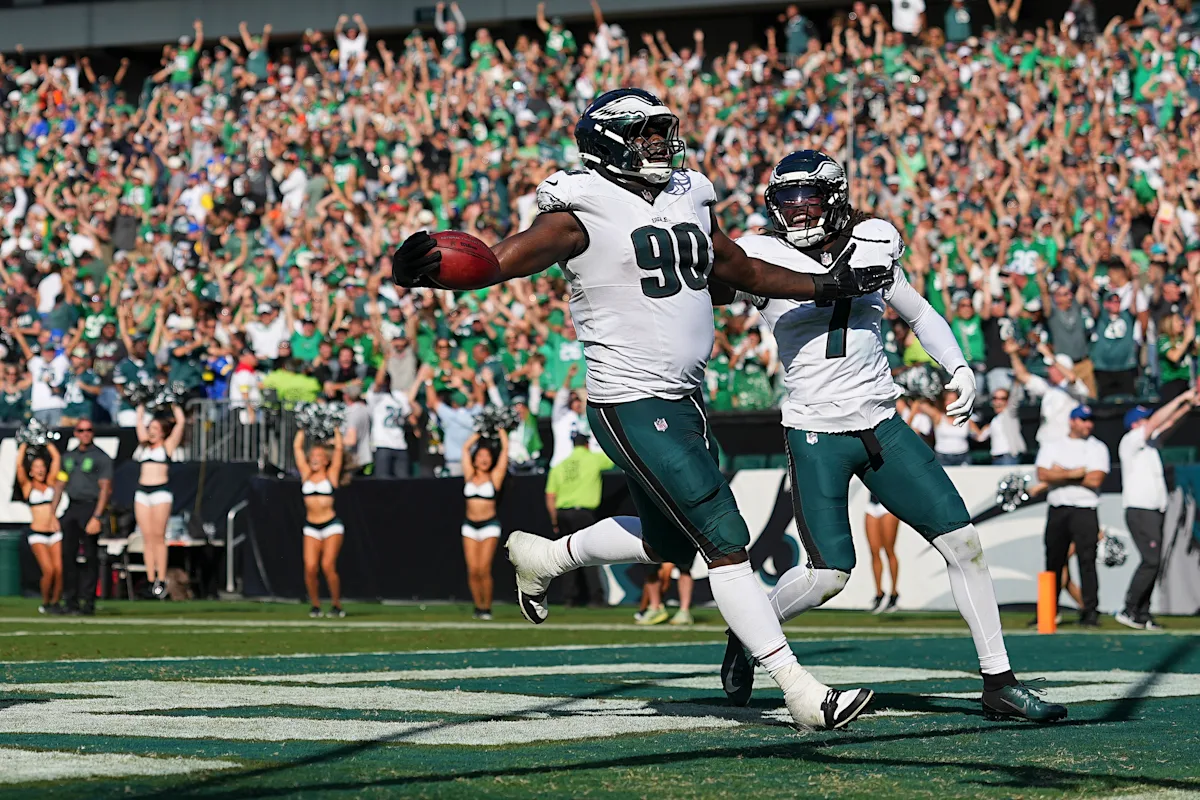
The Philadelphia Eagles vs Tampa Bay Buccaneers match player stats offer a detailed glimpse into one of the most intriguing NFL matchups of recent seasons. Fans of both teams know that when these franchises face off, it’s not just about the final score but also about the individual performances that define the game. Each player’s contribution, whether through passing, rushing, receiving, or defensive plays, plays a critical role in shaping the outcome. The Eagles and Buccaneers have had a series of compelling matchups over the years, and analyzing their latest contest reveals insights into offensive strategies, defensive effectiveness, and player impact. This article dives deep into the key player statistics, breaking down performances by position, team, and situational impact, while providing a broader context for understanding what these stats mean for both franchises.
In the recent game, the Philadelphia Eagles secured a hard-fought victory over the Tampa Bay Buccaneers, with a final score that reflected both offensive balance and defensive resilience. The Philadelphia Eagles vs Tampa Bay Buccaneers match player stats tell the story of this battle, showing not only who gained the most yards or scored the most points but also highlighting the subtle contributions that often go unnoticed, such as crucial third-down conversions, tackles for loss, and special teams plays. These statistics are critical for analysts, coaches, and fans who want to understand how each player influenced the flow of the game.
Team Performance in the Philadelphia Eagles vs Tampa Bay Buccaneers Match Player Stats
Looking at overall team performance provides context before breaking down individual contributions. In this matchup, the Eagles and Buccaneers displayed contrasting styles. Philadelphia focused on efficient play-calling, emphasizing balanced offense and opportunistic defense, while Tampa Bay leaned heavily on the passing game to move the ball downfield. In terms of total yardage, the Buccaneers recorded more offensive yards than the Eagles, highlighting their ability to sustain drives, but the Eagles’ efficiency in scoring opportunities ultimately determined the outcome. Time of possession slightly favored Tampa Bay, yet Philadelphia converted key plays when it mattered most. Third-down performance for both teams showed challenges in extending drives, underscoring the competitive nature of this matchup. These team-level insights provide the foundation for a deeper analysis of player stats in the game.
Quarterback Performance in the Eagles vs Buccaneers Match Player Stats
Quarterbacks are often the focal point of any NFL game, and the Philadelphia Eagles vs Tampa Bay Buccaneers match player stats reflect this reality. For Philadelphia, Jalen Hurts delivered a measured performance, completing a majority of his passes with precision, contributing two touchdowns, and avoiding interceptions. His ability to make quick decisions under pressure helped the Eagles sustain drives and maintain offensive rhythm. While Hurts is known for his dual-threat capability, in this matchup, his passing accuracy was more critical than rushing output, illustrating strategic game planning.
On the Buccaneers’ side, Baker Mayfield generated impressive yardage through the air, completing a substantial portion of his attempts for nearly 300 yards and throwing two touchdowns along with one interception. Mayfield’s performance underscores Tampa Bay’s reliance on the passing game to challenge Philadelphia’s secondary and create scoring opportunities. His ability to stretch the field and connect with receivers for big plays is a key component of Tampa Bay’s offensive strategy and an important highlight in the Philadelphia Eagles vs Tampa Bay Buccaneers match player stats.
Rushing Breakdown in the Philadelphia Eagles vs Tampa Bay Buccaneers Match Player Stats
The rushing statistics from this matchup illustrate the ground game strategies for both teams. Philadelphia’s rushing attack featured controlled power runs, with the team’s primary running back carrying the ball efficiently and converting crucial short-yardage situations into scores. While total rushing yards may not have been overwhelming, the effectiveness of key runs, including scoring plays, demonstrated the importance of situational awareness in the running game. The Eagles used a mix of power runs and occasional quarterback scrambles to maintain offensive balance, keeping Tampa Bay’s defense off guard.
For the Buccaneers, their rushing game contributed to overall offensive sustainability. Tampa Bay’s lead running back provided positive yardage and helped relieve some pressure from the passing attack. By mixing runs with short passes, Tampa Bay attempted to maintain drive momentum and exploit defensive weaknesses. The Philadelphia Eagles vs Tampa Bay Buccaneers match player stats show that while the Eagles had fewer rushing yards, their timely contributions in scoring situations had a greater impact on the final outcome, highlighting how raw numbers do not always tell the full story of a game.

Receiving Leaders in the Eagles vs Buccaneers Match Player Stats
The receiving statistics in the Philadelphia Eagles vs Tampa Bay Buccaneers match player stats highlight the players who consistently moved the chains and produced big plays. For the Eagles, the top receivers contributed not only by gaining yardage but also by scoring touchdowns that were decisive in the game. Each reception helped extend drives or provide critical points in the red zone. This demonstrates that impact is measured not only by total yardage but by effectiveness in key moments.
Tampa Bay’s receiving corps showcased explosive plays, including significant yardage after catch and touchdown contributions. While they moved the ball successfully and challenged the Eagles’ secondary, the timing and situational effectiveness of these plays were crucial. These statistics reveal that individual receiving contributions can shift game momentum and are essential for analyzing overall team performance.
Defensive Highlights in the Philadelphia Eagles vs Tampa Bay Buccaneers Match Player Stats
Defense often sets the tone for games, and the Philadelphia Eagles vs Tampa Bay Buccaneers match player stats include several key defensive metrics. Turnovers, such as forced fumbles and interceptions, played a pivotal role in determining possession and momentum. Both teams made significant defensive contributions that disrupted offensive rhythm, and tackles for loss or quarterback pressures affected the flow of plays. Even in situations where the defense did not generate turnovers, consistent pressure and containment limited big plays, influencing the game’s final outcome. These defensive statistics show the critical importance of players who may not appear on the scoreboard but whose impact is felt throughout the game.
Special Teams and Situational Stats in the Eagles vs Buccaneers Player Stats
Special teams also significantly influenced the outcome of this matchup. Field goals, punt returns, and blocked kicks all created scoring opportunities or shifted momentum. Successful long-distance field goals by the Buccaneers kept them competitive, while the Eagles benefited from impactful special teams plays that directly contributed to points. Situational awareness on special teams, such as converting field position into offensive advantage, demonstrates how these often-overlooked aspects are essential in evaluating Philadelphia Eagles vs Tampa Bay Buccaneers match player stats.
Historical Context – Eagles vs Buccaneers Matchups and Trends
Analyzing the Philadelphia Eagles vs Tampa Bay Buccaneers match player stats requires understanding historical context. Past meetings between these teams have shown varying results, with both sides having periods of dominance. Previous matchups highlighted different offensive strategies, from high-volume passing games to ground-and-pound approaches, providing a lens through which current performances can be compared. Observing trends in quarterback efficiency, rushing balance, and defensive success over multiple games offers insight into how team strategies evolve and how individual player performances impact outcomes.
Why the Philadelphia Eagles vs Tampa Bay Buccaneers Match Player Stats Matter
Understanding player statistics is critical not only for fans but also for coaches, analysts, and fantasy football participants. The Philadelphia Eagles vs Tampa Bay Buccaneers match player stats reveal the effectiveness of individual contributions, the strategic choices made by coaches, and the efficiency of teams in converting opportunities into points. These stats are also a vital historical record, preserving the narrative of the game and providing data to analyze future matchups. For fans, player stats offer a deeper appreciation of the game beyond the final score, showcasing the nuances of football strategy, skill execution, and situational decision-making.
Conclusion
The Philadelphia Eagles vs Tampa Bay Buccaneers match player stats provide a detailed, multi-layered view of NFL competition. By examining passing, rushing, receiving, defense, and special teams, it becomes clear how each player contributes to the outcome. The recent matchup demonstrated how efficiency, situational awareness, and timely plays can outweigh raw yardage totals. These stats tell the story of a competitive game, providing insights for fans, analysts, and the teams themselves. Understanding these numbers allows a complete appreciation of both the individual performances and team dynamics that define each encounter between the Eagles and Buccaneers.
